
In the view of industry insiders, commercial and industrial (C&I) all-in-one energy storage units feature a more compact design, which can effectively reduce the number of devices and the required footprint, lowering construction, operation, and maintenance costs. This better aligns with mainstream market demands.
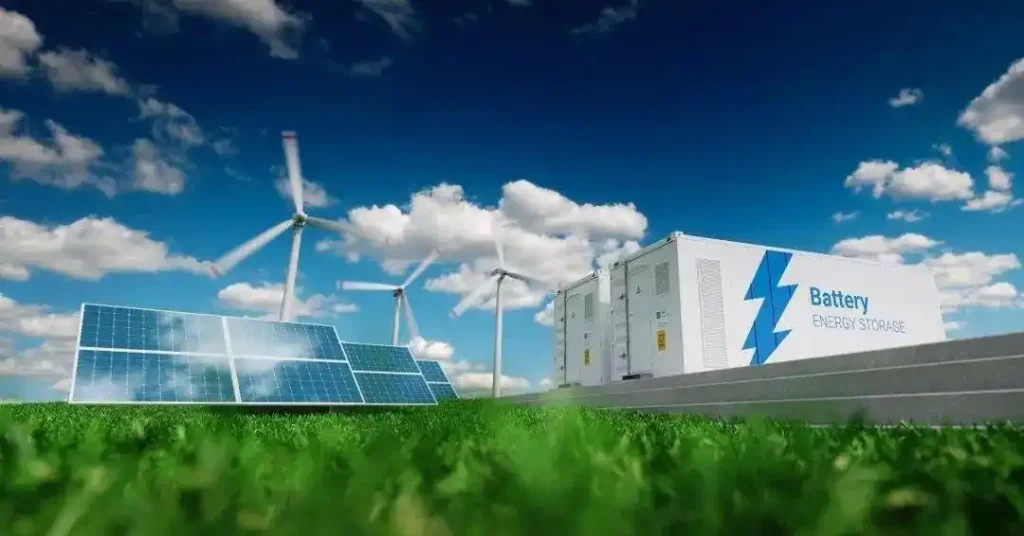
Today, numerous companies including CATL, BYD, Sungrow Power Supply, Huawei, and ZTE New Energy are not only focusing on their core businesses but are also actively researching, developing, and producing modular all-in-one solutions for outdoor C&I applications, releasing their own technological products.
Energy Storage Companies Focus on All-in-One System R&D
According to the China Industrial Association of Power Sources (CIAPS), it is projected that by 2025, the global cumulative installed capacity of C&I energy storage could reach 11.5 GW, with a market size ranging between 19 billion and 24 billion yuan. Domestically in China, by 2025, there is an estimated growth space of about 2.2 GW / 5.5 GWh, with a cumulative market size of approximately 65 billion to 80 billion yuan. It can be seen that compared to large-scale storage, the market size of C&I energy storage is not particularly large. However, the number of players entering the field is only increasing, making competition even fiercer.
“Due to considerations around costs, policies, safety, and operation and maintenance, project owners often face difficulties in decision-making and finalizing contracts. This pressure is forcing energy storage companies to accelerate technological iteration and launch products that better meet owner needs,” said Bu Xiangnan, Executive Vice President of Canwin New Energy Co., Ltd., in an interview with China Energy News. From the perspective of existing technological pathways, all-in-one units can effectively address these issues. They also support various modes such as virtual power plants, grid-connected, and off-grid operation, offering more prominent economic, safety, and convenience advantages. This can enhance owners’ willingness to sign contracts and promote the overall healthy development of the industry.
Discussing the modular design of outdoor C&I all-in-one units, Liu Yong, Secretary-General of the Energy Storage Application Branch of CIAPS, told China Energy News that modular design in energy storage systems refers to decomposing the system into multiple independent modules. Each module contains a certain number of energy storage units, control units, connectors, etc. These modules can operate individually or be combined and expanded as needed. Their flexibility and scalability allow for adding or reducing energy storage modules based on changes in power demand, adapting to energy storage needs of different scales.
Chu Pan, Head of the Energy Storage R&D Department at CNPC Shenzhen New Energy Research Institute, stated in an interview that modular design has applications in many fields and is not new to energy storage. In the early stages of the energy storage industry’s development in China, solutions were derived from photovoltaics. Therefore, during the initial phase of large-scale promotion, centralized large-scale storage solutions were primarily used, which also offered cost advantages. As the market continuously expands and technology iterates, modular integrated solutions have gradually developed. The biggest difference between modular and integrated solutions lies in the change in topology. It increases flexibility but also imposes higher requirements on system control capabilities.
Bu Xiangnan noted that compared to large-scale storage products, C&I energy storage cabinets have relatively lower technological and investment thresholds, making them more accessible for the vast majority of energy storage companies aiming to develop full-scenario products. On the other hand, globally, C&I energy storage is still in its early developmental stage, and many companies want to quickly enter the market to claim a piece of the “pie.”
Technology Exploration Continues Across Multiple Dimensions
At the current stage, the energy storage industry as a whole is highly competitive, vying on quality, price, and technology. For all-in-one units, they also face a similar level of market competition. From a technical perspective, exploration still revolves around multiple dimensions such as capacity, safety, and cost.
Bu Xiangnan frankly stated that regarding capacity, the 314Ah technology is already quite mature. Several companies have achieved mass production, and it is gradually replacing 280Ah applications in C&I all-in-one cabinets. Simultaneously, with the popularization of silicon carbide (SiC) technology, Power Conversion Systems (PCS) have achieved higher operational efficiency. The combination with 314Ah large battery cells has increased the system’s energy from the original 215 kWh to around 250 kWh. It is highly likely to become the mainstream product in the market in the future. From the perspective of thermal management, it has become an industry consensus that liquid cooling solutions will dominate temperature control schemes. Compared to traditional air-cooled battery packs (packs), liquid-cooled packs can control the system temperature within 35 degrees Celsius, with a temperature difference between battery cells controlled within 3 degrees Celsius. The overall system energy efficiency can reach 89%, which is a 10% improvement compared to air-cooled systems. This leads to more compact and efficient energy storage systems. “Safety is also one of the industry’s pain points. We believe there is no absolute safety, only relative safety. How to make products relatively safer requires continuous exploration from multiple dimensions such as materials, design, and quality control.”
“Because each module is independent, fault diagnosis and maintenance become simpler. Only the faulty module needs to be replaced or repaired, without requiring shutdown maintenance for the entire system,” Liu Yong believes. Modular design enables local isolation; once a fault occurs, the impact range is limited, which is beneficial for safe operation. Additionally, outdoor all-in-one modular energy storage systems can be installed quickly, especially prefabricated modules, which can significantly shorten on-site installation time.
Chu Pan indicated that the main product form of modular solutions is the energy storage cabinet. The storage capacity of a single cabinet generally ranges between 100 and 500 kWh. Since over 80% of C&I-side energy storage project scales are within 5 MWh, modular solutions have clear advantages in flexibility. Therefore, energy storage cabinet products have become mainstream in the C&I energy storage market, with their share already exceeding that of centralized energy storage solutions. However, modular solutions are not only applicable to the C&I energy storage field; they also possess unique advantages in the large-scale storage sector. In Ningxia and Shandong, large-scale energy storage projects of 100 MW / 200 MWh scale have adopted modular solutions. Judging from operational results, modular solutions enable more refined control over battery cells, leading to a 3%–4% improvement in the operational efficiency of large energy storage systems. Simultaneously, modular design also makes subsequent operation and maintenance more convenient, increasing system availability to over 90%.
Modularity to Become the Main Competitive Arena
In Bu Xiangnan’s view, setting aside uncertain policy variables, modular design is indeed the main competitive arena for C&I energy storage at the current stage. However, the profit models for C&I energy storage remain relatively singular and carry significant uncertainty, primarily relying on “peak-valley arbitrage” or “self-generation and self-consumption with surplus fed into the grid.” In the future, with the improvement of spot electricity trading policies and the development of virtual power plants, C&I energy storage will gradually participate in electricity markets and extend into providing power auxiliary services. Correspondingly, technological pathways might also undergo innovation.
Liu Yong believes that with the rapid development of energy storage technology, modular energy storage systems have found widespread application in areas such as grid regulation, renewable energy integration, and electric vehicle charging. Particularly in the renewable energy sector, due to its intermittency and instability, energy storage systems are needed for energy storage and regulation. Modular energy storage systems can better meet this demand. In the future, with the further development of energy storage technology and further cost reductions, the application of modular energy storage systems will become even more extensive.
Chu Pan believes that modular energy storage solutions have already become a new trend. Currently, over ten manufacturers have launched modular energy storage solutions, whereas two years ago, only Singularity Energy was primarily promoting modular solutions. While modular solutions have obvious technical advantages, they are not cost-competitive. Compared to centralized solutions, implementing modular solutions for large energy storage systems is more challenging. For modular solutions or products to gain rapid market adoption, new application fields need to be explored. They should not be confined to the large-scale storage and C&I storage tracks but should strive to tap into more niche segments, demonstrating their technological advantages and lifecycle economics.
During the interviews, industry insiders generally agreed that with the further development of AI technology, there will be breakthrough progress in the product design of Energy Management Systems (EMS) for C&I energy storage cabinets, which will inevitably influence the design pathways of the storage cabinets themselves.